Peace with Israel: A Lebanese illusion?
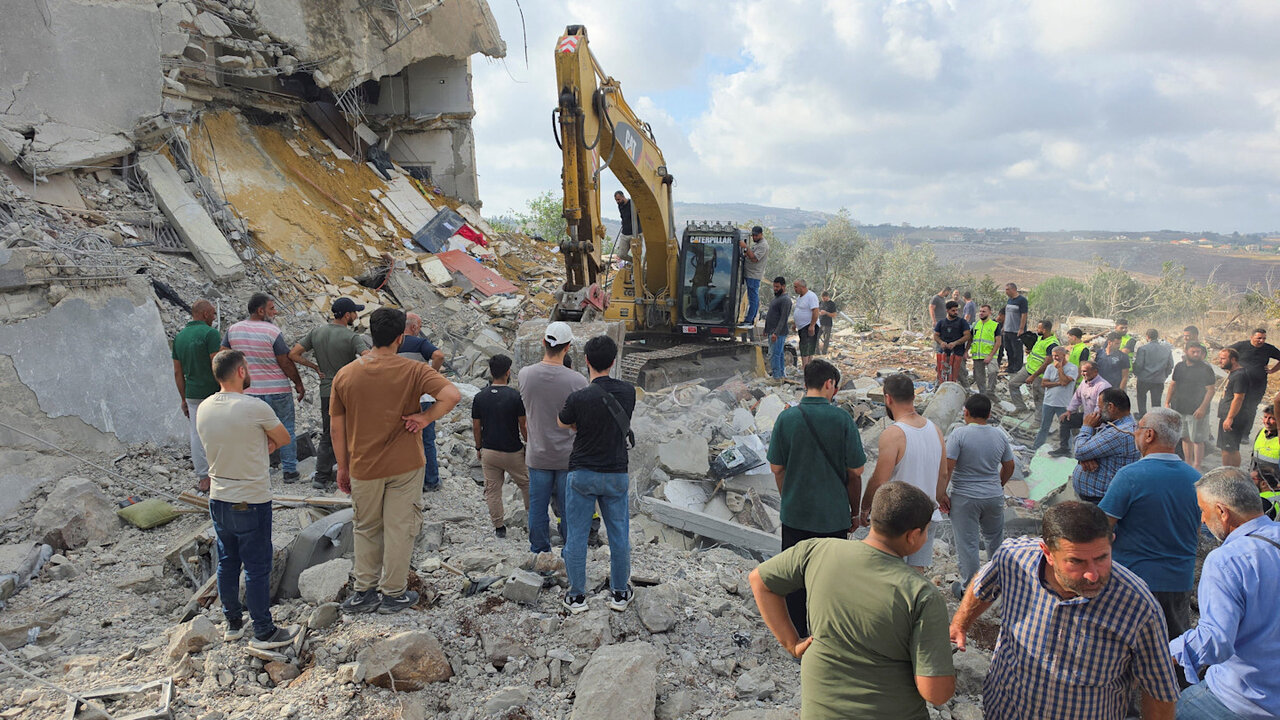
TEHRAN – The occupying Israeli regime continues to wage almost daily aggression against towns and villages in southern Lebanon.
Israeli Occupation Forces (IOF) fired artillery shells in at least eight areas of southern Lebanon. In the town of Bayada, an IOF tank reportedly shelled Al-Mansouri in Tyre district with several rounds.
IOF aggression was also reported in Zawtar al-Sharqiyah, which the regime has been trying to occupy over the past week. The developments have raised questions about the intentions behind the “framework agreement” signed between the Israeli and Lebanese governments on June 26.
The Lebanese government has also faced criticism for reaching a direct agreement with Tel Aviv while southern Lebanon remains under the regime’s occupation forces.
A recent study published by the Israeli Institute for National Security Studies (INSS) outlines a new security doctrine. While the doctrine has yet to be officially announced, it is already being put into practice, reflecting a broader shift in how the regime views its security mechanisms.
The study argues that this new doctrine changes how Israelis understand the relationship between security, war, and peace. The regime no longer sees peace as a lasting strategic goal, but rather as a temporary arrangement. Conflict, by contrast, is increasingly viewed as a permanent condition to be managed rather than brought to an end.
At the heart of this new doctrine is a shift in how the Zionist regime views war: no longer as an exceptional situation, but as a permanent feature of its security.
The study describes this principle of war as a foundational condition, arguing that war is becoming essential to the regime’s security and that peace cannot take its place.
From this perspective, peace is not a goal in its own right, but a temporary means of serving the regime’s interests. The study also links this shift to the belief that the prolonged pursuit of political agreements and peace was part of the “conceptual failure” that led to the October 7 attack.
As a result, the regime’s new security doctrine places greater emphasis on preemptive war and sustained military action.
This raises questions about the assumptions underlying the positions of certain Lebanese groups that advocate “peace with Israel.” Their argument rests on the assumption that the regime seeks to protect its security rather than occupy Lebanon indefinitely, and that it would therefore be willing to withdraw in exchange for a peace agreement that serves its interests.
These changes in Israeli thinking also call into question Lebanese assumptions based on the regime’s peace agreements inked with Egypt and Jordan. The crucial difference is that, when Egypt signed the Camp David Accords, the Israeli political leadership, on both the right and the left, regarded peace with the largest Arab country as a strategic goal in its own right.
The same was true of the treaty with Jordan. Both agreements reflected a broader period in the regime’s thinking when peace, regional integration, and political compromise were seen as essential to its national security.
At the time, the prevailing view among Israelis was that peace produced security. Today, however, a very different view is gaining ground: security is achieved through aggression and a volatile region, while peace is a temporary instrument to be used when it serves the regime’s interests.
The problem with some Lebanese debates is not whether they support or oppose peace, but the assumption that the Israelis still view peace as they did when Tel Aviv signed the Camp David Accords and the Wadi Araba Treaty.
Before considering what Lebanon might offer or gain, the more fundamental question is whether the occupying regime still regards peace as a strategic goal worth making concessions to secure.
More importantly, opinion polls conducted within Israel in recent years have revealed a striking pattern: a majority of Israelis support continuing the pattern of war, even though they do not believe it will bring lasting peace or long-term stability.
This points to an important distinction: a society that supports war without expecting a political settlement does not see war as a path to peace, but as a means of managing a conflict it considers impossible to resolve.
This stands in sharp contrast to the political climate that produced the Camp David Accords and the Wadi Araba Treaty, when peace was viewed as a natural extension of military success rather than an alternative to it.
From this perspective, peace with Lebanon is unlikely to hold the same strategic value for the Israelis that peace with Egypt did in the aftermath of the 1973 war. For a regime that views conflict as a permanent condition, a historic peace agreement holds little appeal.
Instead, it may favor security arrangements that preserve its military superiority and freedom of action while allowing it to maintain its occupation of territory under the pretext of “forward defense.”
This is where the Lebanese and Israeli approaches to the “framework agreement” diverge most sharply. Some Lebanese advocates of peace assume that the occupying regime shares their interest in ending the war and regards doing so as a major strategic priority.
The debate within the Zionist regime today, however, focuses on how to manage a long-term conflict, not how to bring it to an end.
Ultimately, the emerging doctrine points to a view of security in which conflict is permanent, peace is temporary, and war is treated as the norm.
Critics of the Lebanese authorities argue that they should therefore recognize that the strategic conditions, which made the Egyptian and Jordanian agreements with the Zionist regime possible, no longer exist. Trying to replicate those agreements would mean relying on a model of Israeli strategic thinking that no longer exists.
Leave a Comment